
What Old Poker Media Got Right That Modern Gambling Content Forgot
Old poker media was not perfect. Some of it was messy, slow, awkwardly produced, overly romantic, and far too comfortable pretending every final table was a heroic battle between mathematical gladiators. The lighting was strange, the commentary could be uneven, and plenty of content was built around personalities who were probably less charming away from the feature table.
Still, old poker media got something very important right: it treated the game like it mattered.
It cared about hands, decisions, table dynamics, player history, tournament pressure, bankroll swings, rivalries, mistakes, and the human weirdness that makes poker better than a simple gambling product. At its best, poker coverage was not just “here is a bonus, here is a site, here is a button.” It told the story of why a decision mattered and why a player made it.
A lot of modern gambling content has forgotten that. Not all of it, but enough. Too many pages now feel built for search engines, affiliate clicks, and surface-level answers rather than genuine understanding. Poker media had plenty of commercial incentives too, obviously. Nobody was producing television packages and tournament reports out of pure love and sandwiches. But the best old poker content still gave readers and viewers something to care about beyond the next sign-up link.
Poker Media Understood That Context Is the Product
A poker hand is not interesting because two cards are shown on screen. It is interesting because of the situation around those cards. Stack sizes, position, previous action, table image, payout pressure, player tendencies, tournament stage, bet sizing, and emotional history all change what a hand means.
Old poker media understood this better than most gambling verticals. A good hand breakdown did not just say “Player A had queens and Player B had ace-king.” It explained why the raise size mattered, why the call was thin, why ICM pressure changed the decision, why a player’s image affected the river bet, and why the fold looked painful but correct.
That is the kind of context modern content often skips. The gambling internet now produces huge amounts of “best sites,” “top bonuses,” and “how to play” pages, but many of them feel detached from actual play. They explain terms without showing how they matter. They list features without judging them. They describe products without testing the experience.
Poker coverage was strongest when it made decisions feel alive. That is the lesson worth stealing.
Players Were Characters, Not Just Conversion Hooks
Poker content had real characters. Some were brilliant. Some were chaotic. Some were entertaining for reasons that may not survive a modern PR review. But viewers knew the players, their styles, their history, their reputation, and sometimes their flaws.
That mattered because poker is more interesting when the people are not interchangeable. A shove from a loose-aggressive pro means something different than a shove from a tight amateur. A speech-play moment lands differently when the viewer knows the player. A final-table fold becomes more memorable if there is history behind the decision.
Modern gambling content often strips the person out of the page. It talks about “players” as generic users moving through funnels: claim bonus, deposit, wager, withdraw. That is useful up to a point, but it can become sterile quickly. Real gamblers are not funnels. They are cautious, impulsive, sharp, bored, unlucky, stubborn, disciplined, reckless, curious, and occasionally convinced they have solved variance after one good weekend.
Poker media remembered that gambling is full of people, not only mechanics.
Old Coverage Respected the Hand History
Hand histories were the original poker receipts. They showed action street by street, decision by decision. They gave serious players something to study and casual viewers something to follow. Even when the coverage was simplified, the hand itself remained central.
That is something modern gambling content should remember in 2026. If you review a sportsbook, show how the odds compare. If you explain a casino bonus, show the rollover math. If you discuss a slot, talk about RTP, volatility, and session fit. If you cover crypto betting, explain what happens at withdrawal, not just deposit.
The equivalent of a hand history in modern gambling content is evidence. Screenshots, tested payments, sample odds, bonus calculations, KYC notes, support responses, complaint patterns, and real examples. Without those, the content floats.
Old poker media sometimes exaggerated drama, but at least the hand was there. The reader or viewer could see the decision. Modern content needs the same grounding.
Poker Broadcasting Made Tension Understandable
A good poker broadcast does something difficult: it makes invisible tension visible. The cards are hidden from the players, but often visible to the viewer. That creates a strange, brilliant setup where the audience knows more than the people making the decisions. You watch a bluff develop. You see a trap. You feel the river card change everything.
That is storytelling through information imbalance.
Modern gambling content rarely uses tension this well. A casino review can have tension: will withdrawals be smooth, will KYC appear, will the bonus terms hold up, will support answer properly? A sportsbook review can have tension: are the odds competitive, do limits hold, does live betting lag, do winning players get restricted? A crypto guide can have tension: does the wallet setup protect the user, or is there a hidden failure point?
Most pages flatten that tension into tidy headings. Feature, bonus, payments, support, conclusion. Fine for structure, weak for reading. Poker media showed that the reader will stay if the decision has stakes and the explanation has rhythm.
Live Poker Still Gives Content a Real Anchor
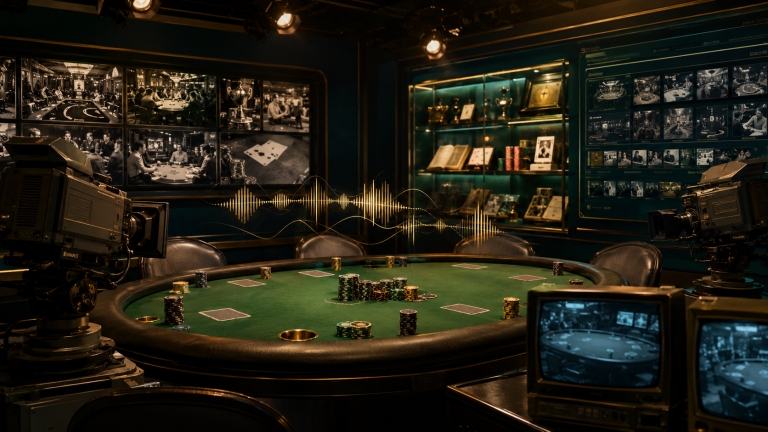
Poker is not just an online product. Live events still give the game a physical center: chips, tables, rooms, dealers, railbirds, feature tables, bad coffee, nervous amateurs, high rollers, and final-table photos where everyone looks either thrilled or deeply sleep-deprived.
That matters in 2026 because so much online gambling content feels disconnected from real venues and real communities. European poker still has major live anchors, from EPT stops to national tours, Irish events, casino festivals, and mid-stakes series that matter deeply to the people who play them. The 2026 EPT Monte Carlo festival, for example, reportedly pulled more than 9,000 entries across 46 events with over €46m in total prize pools, which is a reminder that live poker is not just nostalgia content.
The live scene gives writers something real to cover. Not just keywords. Not just product pages. Real events, real decisions, real winners, real mistakes, real context. Poker media is strongest when it stays connected to that world.
Streaming Brought Back the Human Layer
Poker streaming changed the content model again. Instead of polished television packages only, viewers could watch long sessions, live decisions, commentary, community chat, study moments, emotional swings, and the grind itself. That fits the broader 2026 media shift, where livestreaming has moved far beyond gaming and become a major way audiences connect with personalities, sports, entertainment, and niche communities.
This should be good for poker because poker benefits from time. A single edited hand can be exciting, but long-form viewing shows how decisions build across sessions. Viewers see fatigue, table dynamics, bankroll pressure, and the boring folds that make the big hands possible.
The danger is that streaming can also reward spectacle over substance. Loud reactions, hot takes, clickbait hands, and endless highlight clipping can turn poker into another attention machine. The best streamers avoid that by explaining their thought process, showing discipline, and letting the audience see both the fun and the grind.
Poker content works when the person at the table feels real, not when every hand is packaged like a miracle.
Platform Rules Are Changing the Game
Modern gambling media has to deal with something old poker media did not face in the same way: platform risk. YouTube, Twitch, social networks, ad platforms, payment processors, and app stores all have rules around gambling content, links, certifications, and promotions. Those rules can change, and creators can get caught in the middle.
In 2025 and 2026, concerns around gambling links, uncertified operators, and content enforcement have become more visible. That affects poker creators, affiliates, streamers, and publishers because a video or article is no longer just judged by audience quality. It is judged by platform compliance too.
This makes trustworthy content even more important. If gambling media wants to survive stricter platform rules, it cannot act like a link farm wearing a poker hoodie. It needs editorial standards, clear disclosures, safer gambling context, accurate operator information, and fewer lazy claims. The old poker media lesson applies again: if the content has real substance, it is harder to dismiss as pure promotion.
Modern Gambling Content Became Too Transactional
The worst modern gambling content sounds like it was written by someone who has never placed a bet, played a hand, claimed a bonus, or argued with support over a withdrawal. It lists features, repeats marketing claims, and ends with a call to action so generic it could be used for a toaster.
Poker media, at its best, did not feel like that. It had opinions. It noticed style. It cared about mistakes. It explained why a hand was brave, terrible, standard, or genius only if the context supported it. The writer or commentator had a point of view.
That is what gambling content needs more of now. Not fake edginess. Not shouting. Just honest judgment. If a casino bonus is bad, say why. If a sportsbook looks good but limits winners, say that. If a poker room has traffic but awful software, do not dance around it. Readers can smell a page that exists only to push them somewhere.
Poker audiences were trained to value reads. They deserve content with one.
Old Poker Media Was Educational Without Being Dry
A lot of poker content taught people without feeling like homework. You watched a hand, heard the commentary, saw the showdown, and learned something about position, aggression, bet sizing, or tilt. The lesson came through the story.
Modern gambling guides often separate education from entertainment too much. The educational pages become stiff. The commercial pages become shallow. The best content should do both: teach the reader something useful while still sounding like a human being who has seen the industry up close.
For example, a bonus guide should not just define wagering. It should show why 40x wagering with a 7-day expiry can push bad behavior. A sportsbook guide should not just define CLV. It should explain why beating the close matters even when the bet loses. A crypto casino guide should not just say “KYC may apply.” It should explain how surprise KYC at withdrawal changes the user experience.
Poker media did this naturally because the game itself demanded explanation. The rest of gambling content should borrow that habit.
Community Was Not an Afterthought
Poker communities were messy, funny, sharp, harsh, generous, and occasionally unbearable. Forums, blogs, live updates, Twitch chats, training sites, and local poker circles all helped give the game texture. Players debated hands, called out bad takes, shared trip reports, celebrated winners, and complained about beats with the dramatic energy of people who had voluntarily chosen variance.
That community layer made poker content better because writers and creators were not speaking into a vacuum. They were part of an ecosystem. If the analysis was lazy, someone noticed. If a player story mattered, the audience already cared. If a tournament was important, it had a place in the wider poker calendar.
Modern gambling content often lacks that feedback loop. Affiliate pages chase search traffic but do not always build audience trust. That is a weaker model long term. A site with a real point of view, real standards, and real understanding has a better chance of becoming more than a temporary search result.
What Modern Gambling Sites Should Copy From Poker Media
The useful lessons are not complicated. Give readers context. Show evidence. Explain decisions. Treat users like people, not conversion events. Build around real knowledge. Use examples. Admit trade-offs. Respect bankroll risk. Do not pretend every offer is great. Do not hide the ugly details because they interrupt the sales pitch.
Poker media understood that the interesting part was rarely the surface action. A raise is just a raise until you know why it happened. A bonus is just a bonus until you know whether it can be cleared. A casino is just a lobby until you know whether it pays. A sportsbook is just a menu until you know whether the prices are any good.
That is the standard modern gambling content should aim for. Not longer pages for the sake of length, not more keywords, not more decorative “expert” claims, but better judgment.
The Best Poker Content Still Feels Alive
Old poker media had flaws, but the best parts still feel alive because they were built around decisions, personalities, pressure, and stories. Modern gambling content needs more of that energy and less of the dead corporate review voice that makes every site sound “robust,” “exciting,” and “user-friendly” until the reader quietly loses consciousness.
Poker is a game of incomplete information. Good poker content helped people understand what mattered anyway. That is exactly what gambling content should do now, whether it covers casinos, sportsbooks, crypto sites, bonuses, or poker rooms.
The industry has more tools than ever in 2026: live streams, data, screenshots, odds comparison, blockchain records, user reviews, social feedback, and AI-assisted research. None of that replaces judgment. It only makes lazy content harder to excuse.
Old poker media got one big thing right: the story was never just the cards. It was the decision.
Modern gambling content should remember that before it publishes another page that reads like a bonus banner learned how to type.